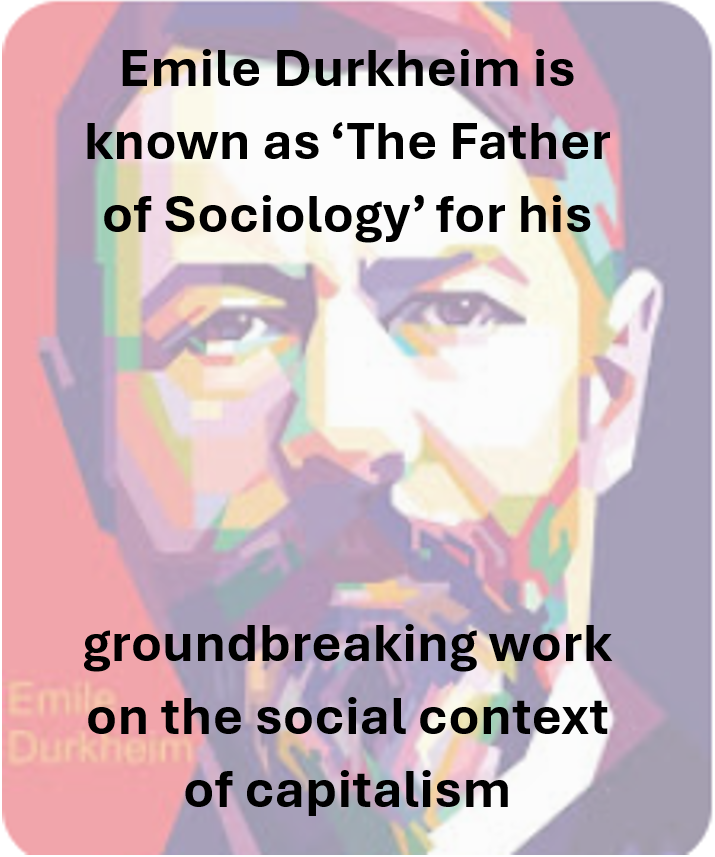
Free markets liberated us from the overweening power of church and aristocracy and created a rights culture. Emile Durkheim established the constitutional, commercial and civil law that capitalism requires back in 1893.
Free markets empower people with a choice of where to buy, work and live, and vendors compete with lower prices right down the supply chain.
Free trade operates above our heads, regulating governments and giving capital the right to own, operate and profit, in markets that may be scarred by monopoly, corruption, kleptocracy, tyranny, slavery and child labour.
Free markets are democratising; free trade can entrench power, concentrate wealth, limit the scope of civil society, and undermine prospects for economic and political development.
With free trade, we are exporting the economics of capitalism while keeping the rights culture for ourselves.
Imagine China’s exports were subject to a severe tyrants’ tax, leaving the Communist Party no choice but to develop domestic demand to plug the gap or face mass unemployment. Instead of output leaving China and money flowing in, much of it spent on nuclear weapons, the police state and buying up Africa, its output would be consumed domestically, raising living standards in a country where three hundred million still live on less than $8.30 a day.
That is just one of the prizes if we offset the competitive advantage that free trade gives to dictatorships by using tariffs to favour fellow democracies. As well as benefiting oppressed people:
- The money that dictatorships lose will flow instead to a democracy, with a better allocation of export earnings between wages, profits, bribes and taxes, and less spent on the elite, its comforts, internal security and external ambitions. Nearly three quarters of global consumption comes from countries with a World Bank Liberal Democracy Index level with India or better, while China and below account for just one eighth. If we set a clear strategic objective, the dictators’ cheapest option is to adapt.
- Rich democracies would reshore some jobs and benefit from a reduction in security costs, offsetting worse prices from less competitive global markets (aka no longer profiteering from other people’s oppression).
- As well as strategic advantages, it is ethically right to support democracies rather than fund tyrants. Trade ideology and practice are in flux and now is the time to act.
- Determining democratic credentials, from fair elections to a free media and an independent judiciary, is complex but not new. The European Union had to judge those emerging from Soviet domination, as democratic institutions and governance are a prerequisite for EU membership. It would mean the World Trade Organisation (reformed or replaced) operating very much as now, arbitrating any disputes, but applying a different rule book.
The only real winners from free trade are the tyrants, gaining a competitive advantage from exploiting a captive population who are cheap and expendable because they lack rights. Keeping more of their own output will enhance their power as consumers while weakening their oppressors.
Free trade looks like a win-win because it is profitable for both sides and our understanding of the economy focuses primarily on money. Yet that is only half the story: in the real world, objects, time, space and information are also exchanged. Export profits are inherently inflationary, with more money chasing fewer goods as output is diverted from domestic supply. Although imports are deflationary, being cheaper than the domestic alternative and with jobs lost to foreign competition, that netting off disguises uneven costs and benefits.

When an African landowner chooses to export, the farm worker still has a job but the product of the local land, water and labour is shipped out of the country for the benefit of someone else. With less food for local consumption, everyone faces higher prices. In recompense, the landowner receives more profit.
Unless there is a labour shortage, there is no reason to expect higher profits to fund higher wages. More likely, any hard currency is placed in foreign bank accounts, or spent on imported luxuries, or imported machinery to replace the labourers altogether.
Worst of all, the money could be used to buy guns. Then people lose twice over from free trade, seeing the product of the local land, water and labour exported and the tools of their repression bought with the proceeds.
For consumers, free trade makes imports cheaper but at the cost of our long-term security. Moreover, it gives despots a competitive advantage because people without rights are cheaper to employ and easier to exploit.
We used to think that made dictatorships less productive but China has proved that wrong. Putting a tariff on countries that restrict or abuse basic rights would help democracies by cutting unfair competition.
Struggling democracies would be the first to benefit, but the real winners could be the captive populations. Longer term, global trade may incentivise democracy and human rights instead of entrenching despotic power. Near term, captive populations benefit from any switch to domestic demand, given their despot’s need to replace lost export markets to extract any value from their work.
The only real winners from free trade are the tyrants.
To read more on reforming global trade:
Democratising global trade: here’s how
Why make the World’s poor fight anew for rights we know they need